
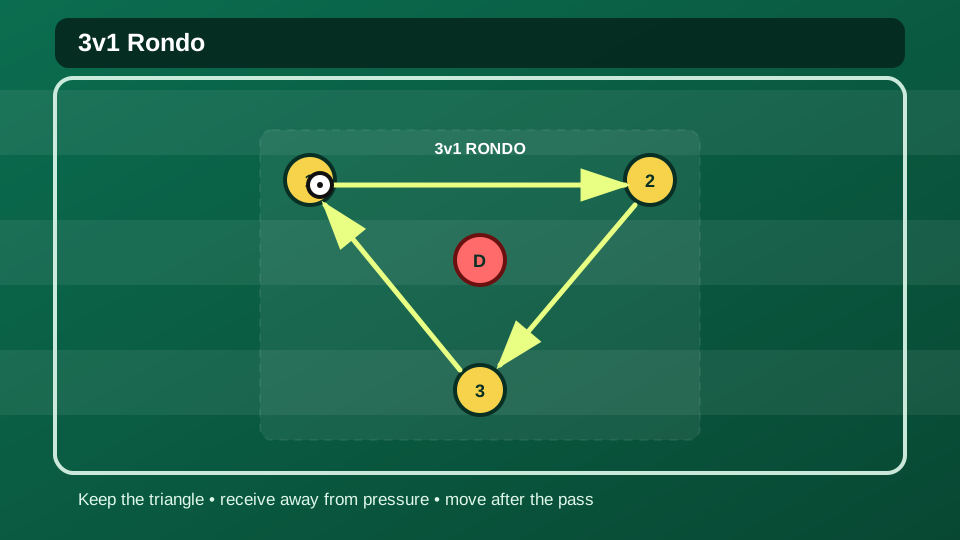
Animated setup
Loops automaticallyWatch the movement
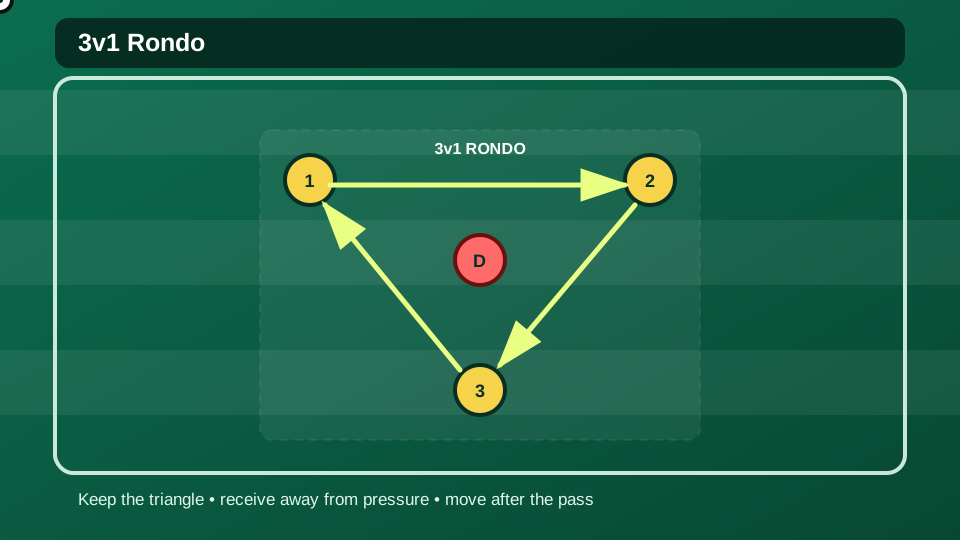
Follow the moving ball, then compare the movement with the coaching points below.
Coaching objective
Three attackers maintain a passing triangle around one defender and create two clear options for the player on the ball.
Setup
- Mark an 8-by-8 to 10-by-10-yard square.
- Three possession players work around the outside or on three sides of the square.
- One defender applies pressure inside.
Rules and scoring
- The attackers score one point for five consecutive passes.
- The player who loses the ball becomes the defender, or rotate defenders every 30–45 seconds.
- Begin with unlimited touches, then move to two touches.
Coaching cues
- Move after every pass to rebuild the triangle.
- Receive on the foot away from the defender.
- Use the first touch to escape pressure.
- Support at different angles, not in a straight line.
- Pass before the defender arrives.
Detailed coaching points
- Freeze briefly when the two support players become hidden behind the defender.
- Adjust the square so success is possible without removing pressure.
- Encourage the ball carrier to disguise the pass with body shape and eyes.
- On a turnover, demand an immediate reaction from both the new defender and the new possession player.
Common errors and corrections
- Two attackers standing in the same passing lane.
- Receiving with the foot nearest the defender.
- Passing and standing still.
- A square that is too large, allowing slow decisions.
Progress the drill
- Limit the outside players to two touches.
- Award two points for a one-touch pass.
- Reduce the square.
- Add a target gate that players can pass through after five passes.
Simplify the drill
- Increase the square.
- Use a passive defender.
- Allow the player on the ball to step outside the square.
- Count three passes as a point.
What to measure
- Consecutive passes completed.
- Number of clear passing options around the ball.
- Receiving foot selected under pressure.
- Reaction speed after possession changes.