
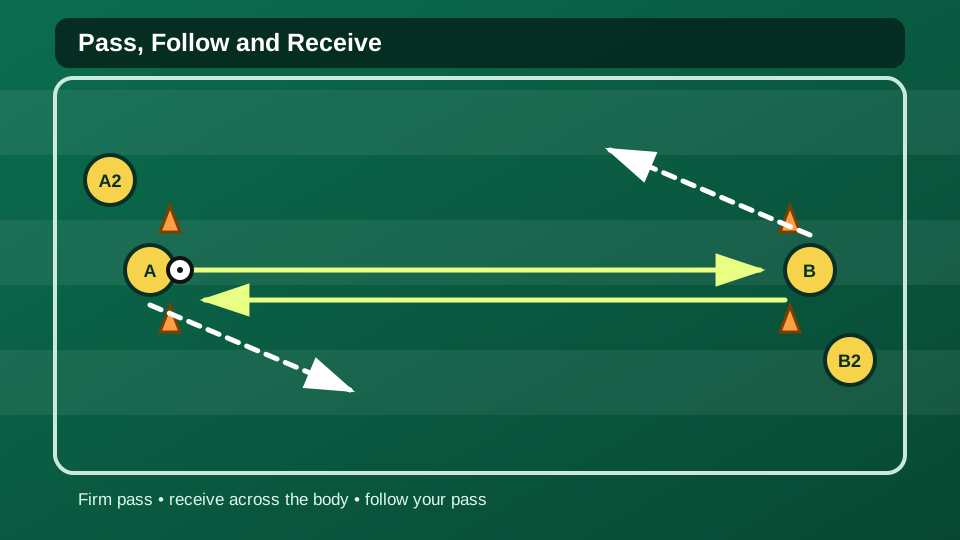
Animated setup
Loops automaticallyWatch the movement
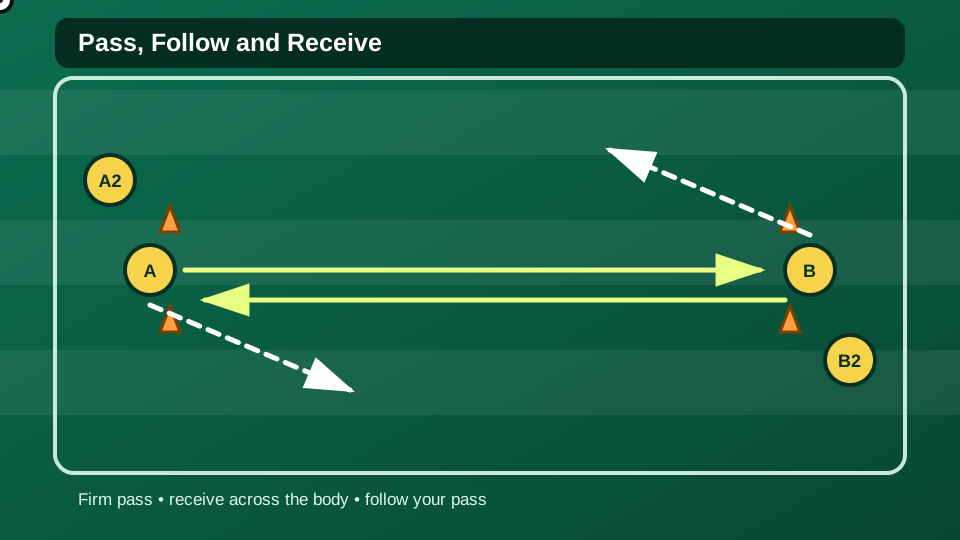
Follow the moving ball, then compare the movement with the coaching points below.
Coaching objective
Players deliver a firm, accurate pass, receive across the body, and immediately follow their pass to support the next action.
Setup
- Place two cone gates 12–18 yards apart.
- Split players evenly behind the two gates.
- Start with one ball at one end; add a second ball once the rhythm is clean.
Rules and scoring
- Pass through the opposite gate and follow the pass.
- The receiver takes the first touch outside the gate, then passes back to the other line.
- Work for 60–90 seconds, rest briefly, and repeat with a new receiving foot or touch limit.
Coaching cues
- Check the far shoulder before receiving.
- Open the hips and receive on the back foot.
- Play a firm pass along the ground.
- Move immediately after the pass.
- Call the receiver’s name and show a clear target.
Detailed coaching points
- The first touch should prepare the next pass rather than simply stop the ball.
- Ask players to arrive behind the ball early so their body is balanced at contact.
- Increase the distance only when players can keep the ball on the ground and inside the gate.
- With two balls, demand scanning so players know when the next ball is arriving.
Common errors and corrections
- Receiving square with both feet facing the passer.
- Standing after the pass instead of following it.
- Passing behind the receiver or with too little pace.
- Looking down throughout the entire action.
Progress the drill
- Use one-touch passing.
- Add a second ball from the opposite end.
- Require the first touch with the outside foot before the return pass.
- Add a passive defender in the middle who screens the passing lane.
Simplify the drill
- Move the gates closer together.
- Widen the gates.
- Allow the receiver to stop the ball before passing.
- Use only one ball and remove the time pressure.
What to measure
- Passes travelling through the target gate.
- First touches that prepare the next action.
- Time between passing and supporting movement.
- Frequency of scanning before the ball arrives.