
Coaching objective
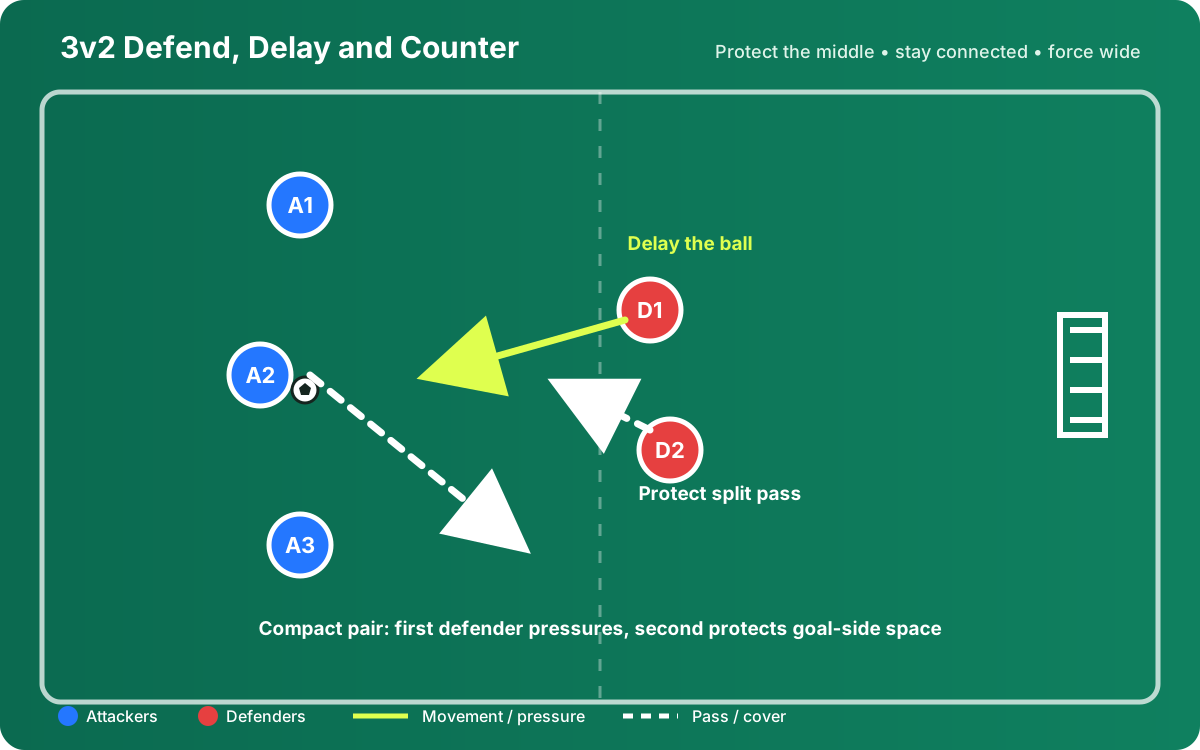
Two defenders stay compact, slow the overload, and force the attackers into a predictable or low-value option.
Setup
- Three attackers begin 25–35 yards from goal against two defenders and a goalkeeper.
- Place two counter gates near the attackers’ starting line.
- The coach serves the ball to any attacker.
Rules and scoring
- Attackers have ten seconds to create a shot.
- Defenders score by winning the ball and playing through either counter gate.
- Rotate defenders every three repetitions because the work is demanding.
Coaching cues
- Protect the goal and central passing lane before pressing.
- First defender delays the ball; second defender covers inside and tracks the most dangerous runner.
- Stay connected and avoid being split by one pass.
- Force the ball wide, then use the touchline and goalkeeper as support.
- Attack the ball when the pass is slow, the touch is heavy, or the receiver faces backward.
Coach’s key teaching points
- Success may be delaying long enough for recovering teammates, even without winning the ball.
- The second defender must constantly adjust between covering the ball and protecting the far-side runner.
- The goalkeeper should communicate early and protect the space behind the defenders.
Common errors to correct
- One defender presses too early and leaves the other in a 2v1.
- Defenders retreat directly toward goal without influencing the ball.
- Covering defender follows a wide runner and opens the central lane.
- Both defenders focus on the ball and lose the far-side attacker.
Progress the drill
- Add a recovering defender who enters after three seconds.
- Let attackers begin from different angles.
- Give two points for a counter goal within five seconds of the regain.
Simplify the drill
- Reduce the attackers’ starting width.
- Allow defenders to begin closer to goal.
- Use a passive third attacker initially.
What to measure
- Time delayed before the shot.
- Shots forced from wide or low-value areas.
- Number of central split passes prevented.
- Successful counters after regaining possession.